Adhesion & process compatibility
Establish adhesion and process compatibility for desired materials.
Technology
Addrix uses a nanostructured carbon-based coating with dense, sharp, high-aspect-ratio features designed to mechanically disrupt microorganisms on contact rather than relying on a releasable antimicrobial agent.
How it works
The underlying technology is produced through chemical-vapor-deposition methods that grow carbon nanostructures directly on a qualified substrate. Commercial Addrix process parameters are developed with coating partners and validated for each application.
Geometry, substrate, surface preparation, thermal tolerance, use environment and cleaning exposure are screened before coating development begins.
A thin carbon-based film is grown onto the prepared component using a plasma-assisted deposition process. The current development target is approximately 2 µm thickness.
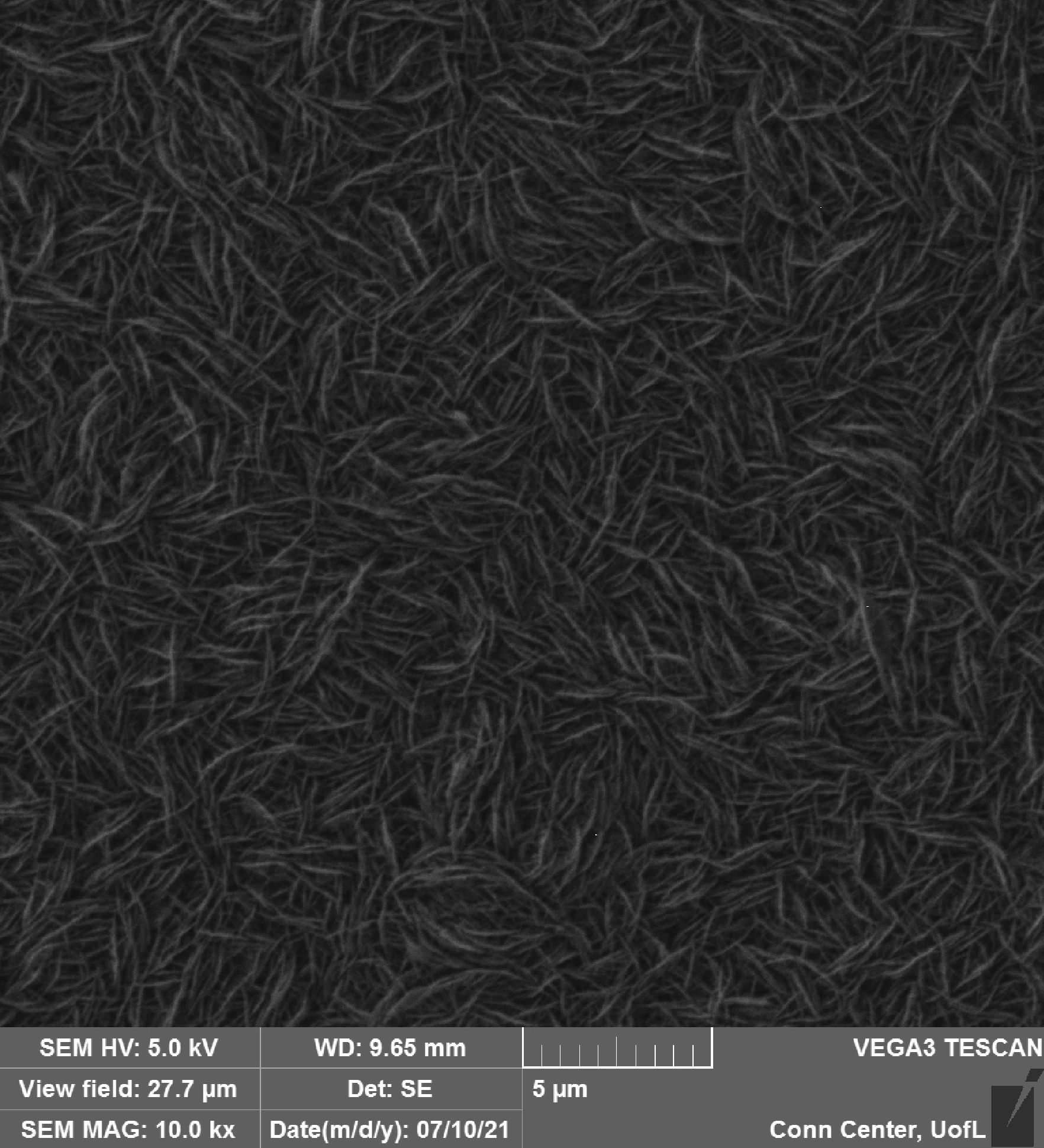
Process conditions create a dense, randomized field of elongated diamond/graphitic nanostructures with sharp tips and high aspect ratios.
Morphology, adhesion, repeatability, biological performance, cleaning exposure and mechanical durability are evaluated on production-representative parts.
Surface architecture
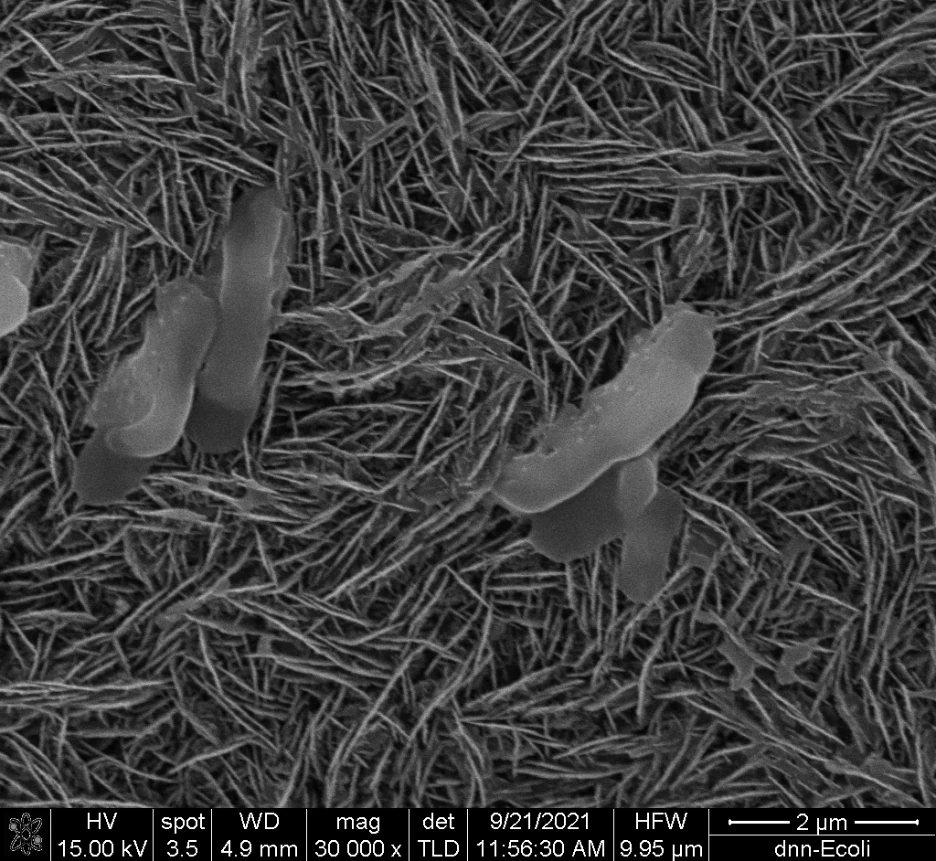
Addrix is a nanostructured carbon-based coating made of randomly oriented diamond and/or graphite nanostructures. Their bases are anchored to the substrate, while sharp tips extend outward with radii under about 100 nm.
Peer-reviewed testing of Addrix describes a dense field of diamond nanospikes around 1 µm in height and approximately 50 nm in width. Commercial morphology is controlled within the validated Addrix process window.
Current development profile
Addrix is available for application development and licensing. Current work is focused on components within the following practical parameters, with final qualification performed for each OEM application.
Mechanism
The surface is designed to damage microbial cells through nanoscale mechanical interaction—fundamentally different from coatings whose performance depends on humans replenishing a chemical active ingredient.
Validation priorities
Establish adhesion and process compatibility for desired materials.
Characterize performance under wiping, cleaning chemistry, abrasion, impact and use conditions relevant to the component.
Establish a deposition process capable of mass-production.
Application development
Start with the component, substrate, use conditions and validation need.